
Charlottetown, PEI
Driveway Retaining Walls in Charlottetown
Driveway retaining walls support a change in level beside vehicle areas in Charlottetown and nearby communities. We install armour stone, block, and concrete systems for residential drives and commercial parking edges. Learn how traffic loads, drainage, snow clearing, and construction access affect the wall before you widen or rebuild a driveway.
On this page
- Why does a driveway wall need a load assessment?
- Is armour stone suitable beside a driveway?
- How should driveway runoff be handled?
- What needs checking before a driveway is widened?
- Can the driveway stay open during construction?
- How do snow storage and clearing affect the wall?
- Does the wall replace a vehicle barrier or guard?
- What belongs in a driveway wall quotation?
Why does a driveway wall need a load assessment?
A driveway wall needs a load assessment because vehicles put weight on the retained ground, beyond the weight of the soil itself. Cars, delivery vans, and heavier service vehicles may use the same surface at different times. The distance between traffic and the wall is also important. A decorative garden wall is not automatically suitable beside a parking space. Overlooking the intended traffic can lead to movement that affects both the wall and the driveway edge. We discuss present and future vehicle use before choosing a system, and identify where an engineered design is needed to address the site's loading and ground conditions.
Is armour stone suitable beside a driveway?
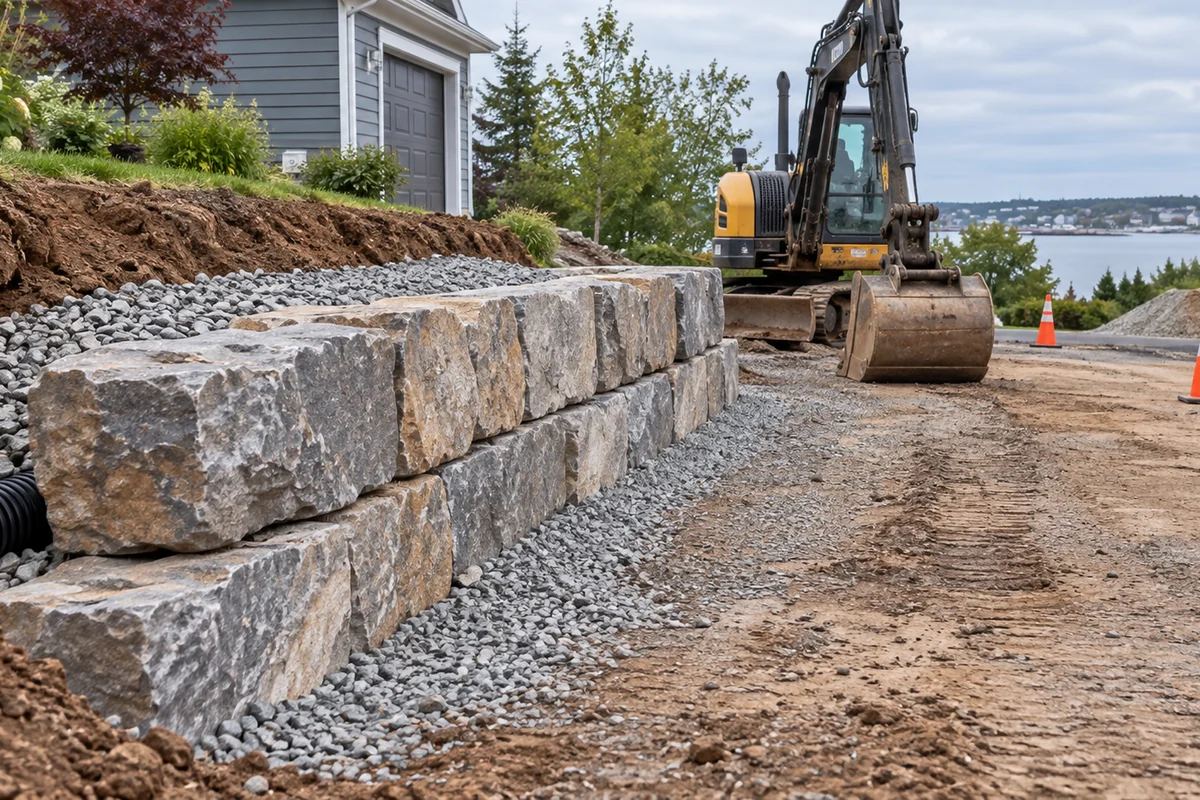
Armour stone can suit a driveway edge when the design has enough footprint, stable bearing, appropriate drainage, and room for the stone to be placed safely. The natural face works well beside larger homes and rural properties, but the stone's size can be a drawback on a tight urban lot. A boundary close to the pavement may limit the workable wall width. Forcing a narrow layout around massive stones can compromise the intended system. We compare armour stone with segmental block, large precast units, or poured concrete where space and geometry call for another approach. The material choice follows the site requirements as well as appearance. Compare armour stone retaining walls.
How should driveway runoff be handled?
Driveway runoff should be directed through a planned drainage route rather than allowed to collect behind the retaining wall. Paved areas shed water quickly, and even a small low spot can focus flow along one part of the wall. During winter and spring, blocked routes may leave ice or saturated backfill near the vehicle edge. Drainage review includes the pavement fall, any catchment above it, and a suitable outlet. Surface water and subsurface drainage may need different measures. We check these relationships before final levels are chosen so that protecting the wall does not create a puddle at the garage or transfer runoff to a neighbouring property.
What needs checking before a driveway is widened?
Driveway widening needs a check of property limits, utilities, setbacks, drainage, and the wall's capacity for the new use. The strip beside an existing drive may contain fill or buried services rather than suitable support. Moving parked vehicles closer to a wall changes the loading pattern even if the paved area grows only a little. Starting excavation before these details are understood can cause avoidable redesign or damage. Share the proposed vehicle layout and any available survey when requesting an estimate. We assess the wall work as part of the wider grade change, with the relevant local authority consulted about permits and access requirements where applicable.
Can the driveway stay open during construction?
A driveway may remain partly open during construction when its width, excavation limits, and safe access routes allow it, but uninterrupted access cannot be assumed. Retaining-wall work can require removing the edge of a drive and bringing lifting equipment close to the excavation. Using that area too soon can place loads where support is incomplete. A residential project may need temporary parking elsewhere; a commercial property may need a phased delivery or customer route. We discuss access restrictions as part of the scope before dates are agreed. The construction plan should identify when traffic is excluded and what conditions allow the area to return to use. Compare commercial retaining walls.
How do snow storage and clearing affect the wall?
Snow storage and clearing affect a driveway wall by changing where weight, meltwater, and equipment contact occur. A snow pile placed above the wall may add load and concentrate runoff during a thaw. A plow blade can also damage projecting stone or caps when the edge is hard to see. These are practical operating conditions to include in the initial discussion, especially on commercial parking areas. We consider the edge layout, visibility, and drainage route with the owner. Planning for winter use helps avoid treating a finished wall as an unrestricted storage edge or allowing snow operations to undo careful construction details.
Does the wall replace a vehicle barrier or guard?
A retaining wall does not automatically serve as a vehicle barrier or a pedestrian guard. The wall's job is to retain ground; edge protection has separate purposes and design requirements. Where a vehicle could approach a drop or people use a walkway above it, the need for protective features should be reviewed for the actual site. Adding posts later can interfere with wall units, reinforcement, drainage, or the footing. We identify those interfaces early so any required barrier or guard can be coordinated with the wall design. An attractive cap or a row of large stones should never be assumed to provide a tested protective system.
What belongs in a driveway wall quotation?
A driveway wall quotation should describe the wall system, excavation, support, drainage, and the restoration of any affected paving or lawn. It should also identify traffic restrictions, disposal, and known access limits. Comparing only a rate per metre of wall can hide major differences in vehicle loading and preparation. Share the approximate wall length, height change, driveway width, and types of vehicles that use the area. Photos showing the road entrance and the entire edge are more useful than a close-up of one crack. We can then discuss a defined scope and the additional design information needed before the work proceeds.
Discuss your project
Share the location, scope, timing, and any site conditions that may affect the work.